Flagstaff to Pine section. Mixed feelings, mud, cold, and cougars.
This blog post was originally posted on The Trek right here.
Stats:
Miles: 230.6 – 338.6
Days: 10-14
I wanted a desert hike. Why the hell is it snowing in my tent?
We start south of Flagstaff on a windy Tuesday. Climb out of the canyon and enter the land that makes hikers question their life choices — the land of deep hoof potholes filled with brown water. Mud sticks to your shoes, and as you walk, you collect half the forest with you — pine needles, grass, leaves. Then you discard them like some old hiker “horseshoes.” Weirdo mushrooms grow out of cattle poop.
Cows watch you go by — fighting wind and mud, slipping, twisting ankles, swearing at no one. Maybe you’ve died and entered bovine paradise instead of the human one? This is probably what hiker hell looks like: 70 miles of mud from Flagstaff to Miller Canyon.
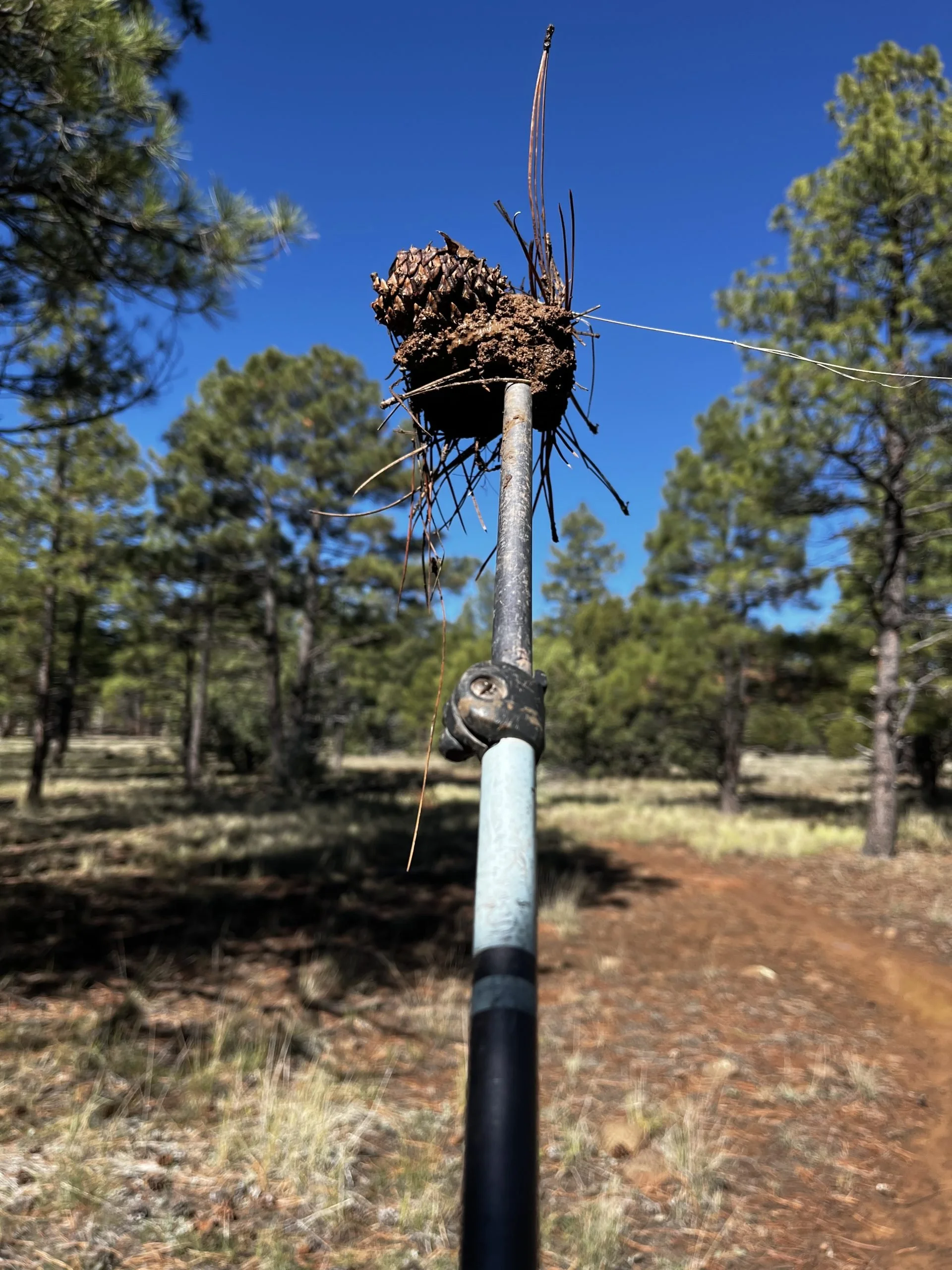

For the whole stretch, the tent needs to be dried at lunchtime.
“Ewww,” I mumble when I touch the tent ceiling at midnight, knowing packing will be wet in the morning. It gets progressively colder.
“There’s frost,” says Kez in the morning.
“No, there isn’t,” I grumble, half-asleep.
“Yep, our tent is frozen.”
I touch the ceiling again, and it snows on my head.
I chose to hike the AZT because I wanted a short desert hike. And don’t get me wrong — I know it rains in the desert, and it does get cold — but I didn’t expect post-monsoon season to hit me with so much moisture right from the start.
For three mornings in a row, we pack up a frosty tent and trudge through mud.
Am I following a cougar, or is the cougar following me?
The only exciting thing about mud is that you see the footprints of everyone who’s passed before you. It’s like a forest trail register that records your presence whether you wanted to sign it or not.
You start seeing stories. These are Thunderbird’s shoes — his Topos have a Vibram sole stamped all over the trail. And here’s Quadzilla with that line in the middle of his tread. Some coyote, a small bear, squirrels. Wait, was that…? I back up. It’s big. It doesn’t have claw marks. It’s a cougar. A big one. And a smaller one too. Maybe I should be looking up and around instead of down…
We stop at Waldrup Tank to take some water. It’s a brown cow pond, but the outflow has some clear water. It’s only 3 p.m., but we’ve walked about 20 miles and decide our feet can’t take any more. You’re supposed to camp about 200 feet from water to give wildlife some peace, but we like to camp even further — to give ourselves peace from wildlife living their wild lives at night. About a mile from the tank, we find a gate and pitch our tent beside it.
It barely gets dark when an elk makes its first appearance, but it’s somewhere farther off. Silence. Then, something cracks beside our tent. What was that? We start talking, and the sound stops. Soon, we hear something that sounds like a mix of a panicked squirrel, an angry bird, and a small cat. Kez is convinced it’s a bird. We’ve never heard that bird before, but okay — I like the bird theory better. Back home, whenever my motion light on the staircase went off, I’d pretend it was a cat, even if I knew the cat was outside. Sometimes it’s easier to sleep that way.
Suddenly, the “bird” starts screaming like a little girl, and we know it’s not a bird. It’s definitely a big cat. Shit. It’s close. I’ve been told on the PCT that you never see a cougar, but the cougar always sees you. So I guess staying quiet and “invisible” isn’t the right course of action here. We’ve already been noticed. We talk loudly between ourselves. I take my Garmin with the SOS button ready and a Swiss knife. I’m sure neither will help if a mountain lion decides to have me for dinner, but I’ll take my chances. Kez brings one of his poles inside the tent.
The cougar switches to elk imitation — which could use more practice if it wants to fool anyone. After a while, Kez is snoring, unbothered by the cougar that seems to have moved on. Now only the actual elk comes by, making grumpy old-man noises all night, as if bending down to eat grass hurts its back.
In the morning, we meet a bunch of hunters with a large pack of dogs speeding in the direction we came from.
“Did you see the comment on Waldrup Tank the day after yours?” asks Slocahontas when we meet her again in Pine.
We hadn’t.
Apparently, the night we heard the cougar sounds, a cow was mangled near Waldrup Tank. A hiker found the carcass the next day.
Well, I’m extremely happy we decided not to stay near that tank that night. Listening to a cougar brutally kill a cow is not on my bucket list.
Not all that miserable.
“There’s a meadery not too far from the trail,” Kez drops casually the day before we reach Pine. We’re pretty miserable after all that mud, restless sleep filled with elk and cougar sounds, and having to scrape frost off the tent walls. My arthritic knee is swollen again, making crouching for water uncomfortable. There’s this tiiiiny freakin’ dark cloud above us — the only dark blob in perfectly blue skies — and of course it decides to start sprinkling us with rain.
We look at that meadery icon on Google Maps and start seriously considering it. It adds three miles. It’ll be dark when we get there. What if it’s closed? There’s no service, so we can’t check — and this isn’t the UK; a meadery isn’t a pub where you drink till you pass out and then stay for the night. But if it’s open, there will be a roof, there will be warmth, and there will be mead. Not that we even drink much. But there won’t be cows and mud and frost.
Mulling over that, we go up a hill and stand on the edge of the Mogollon Rim. The view of distant mountains in the sunset sky — and we forget the meadery.
I was ready to deem this Flagstaff–Pine section one of the most miserable sections in my modest thru-hiking career, but that view — and everything after — redeemed it. Soon, we were walking the Mogollon Rim, and this was exactly how I imagined my “desert hike.” Agave growing in copper-colored soil. Rays of morning sun piercing through juniper and pine trees, lighting up the grasses, highlighting the bright brown stems of manzanita shrubs.
Finally, my desert hike.
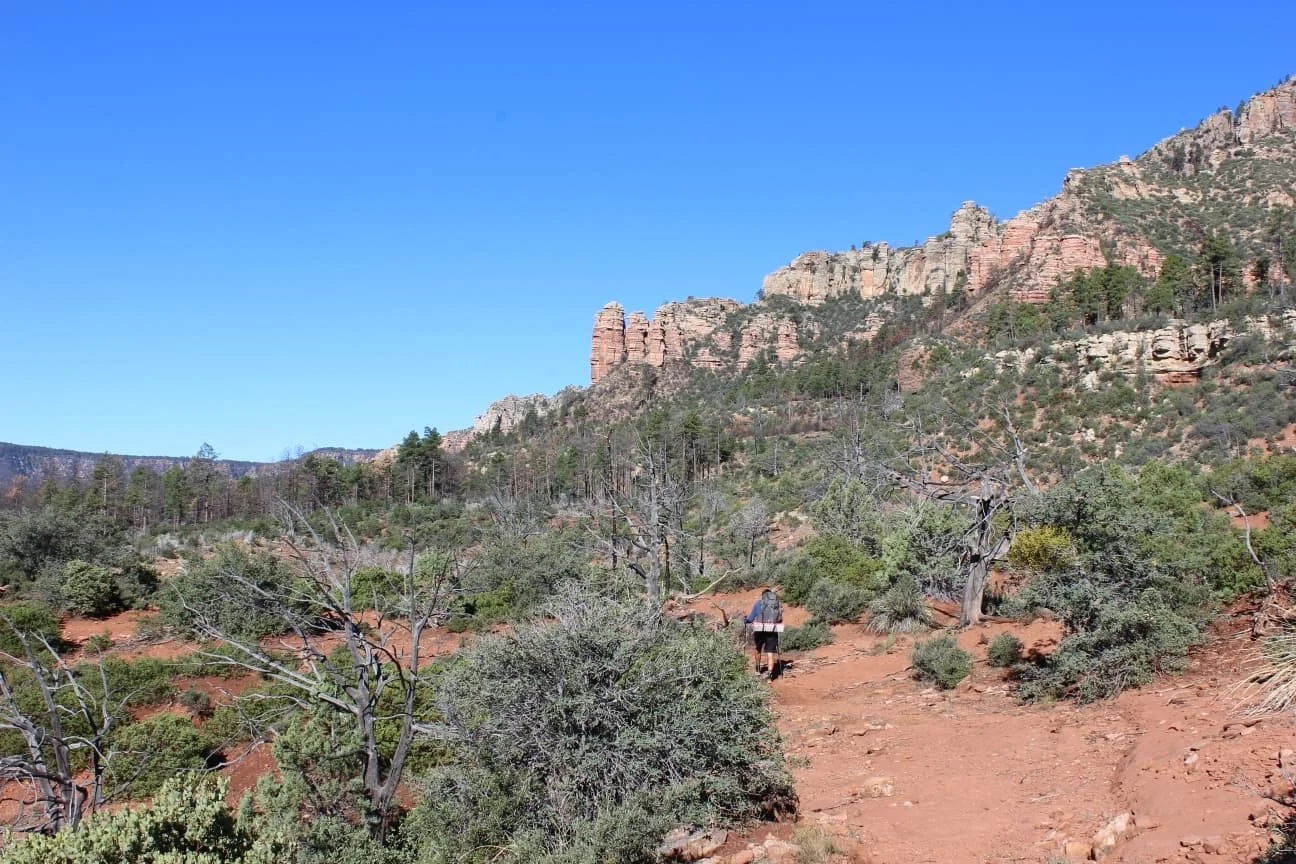
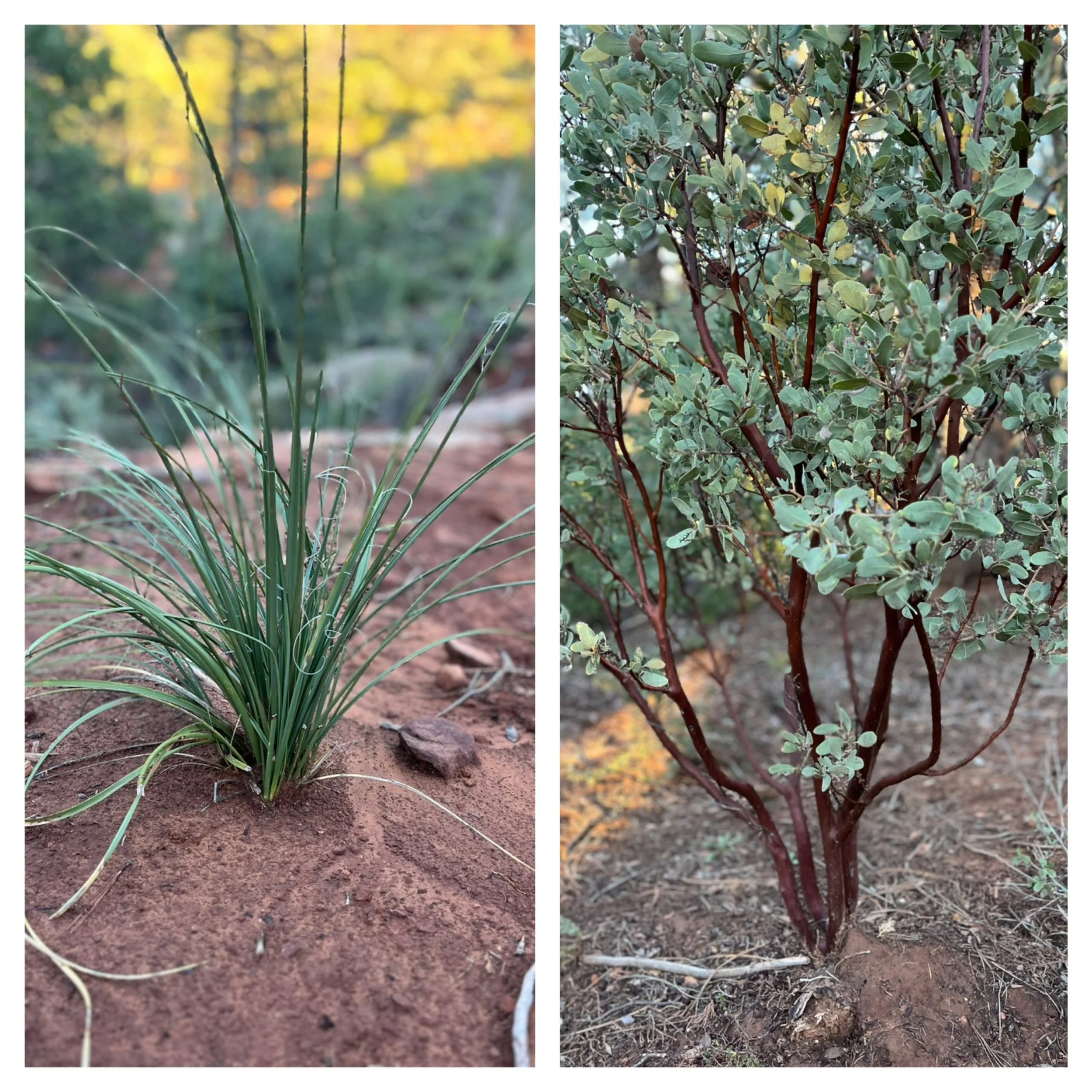
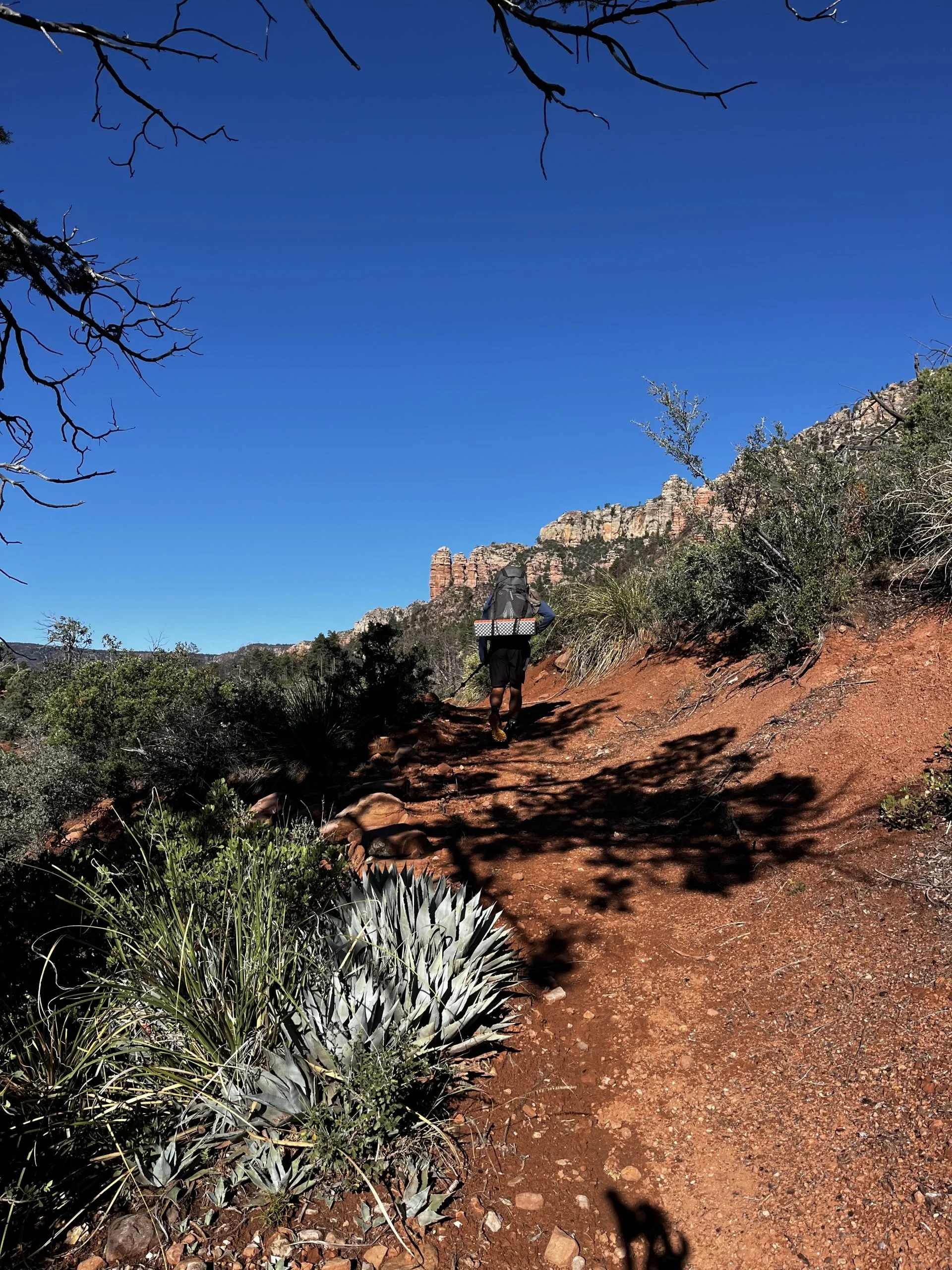
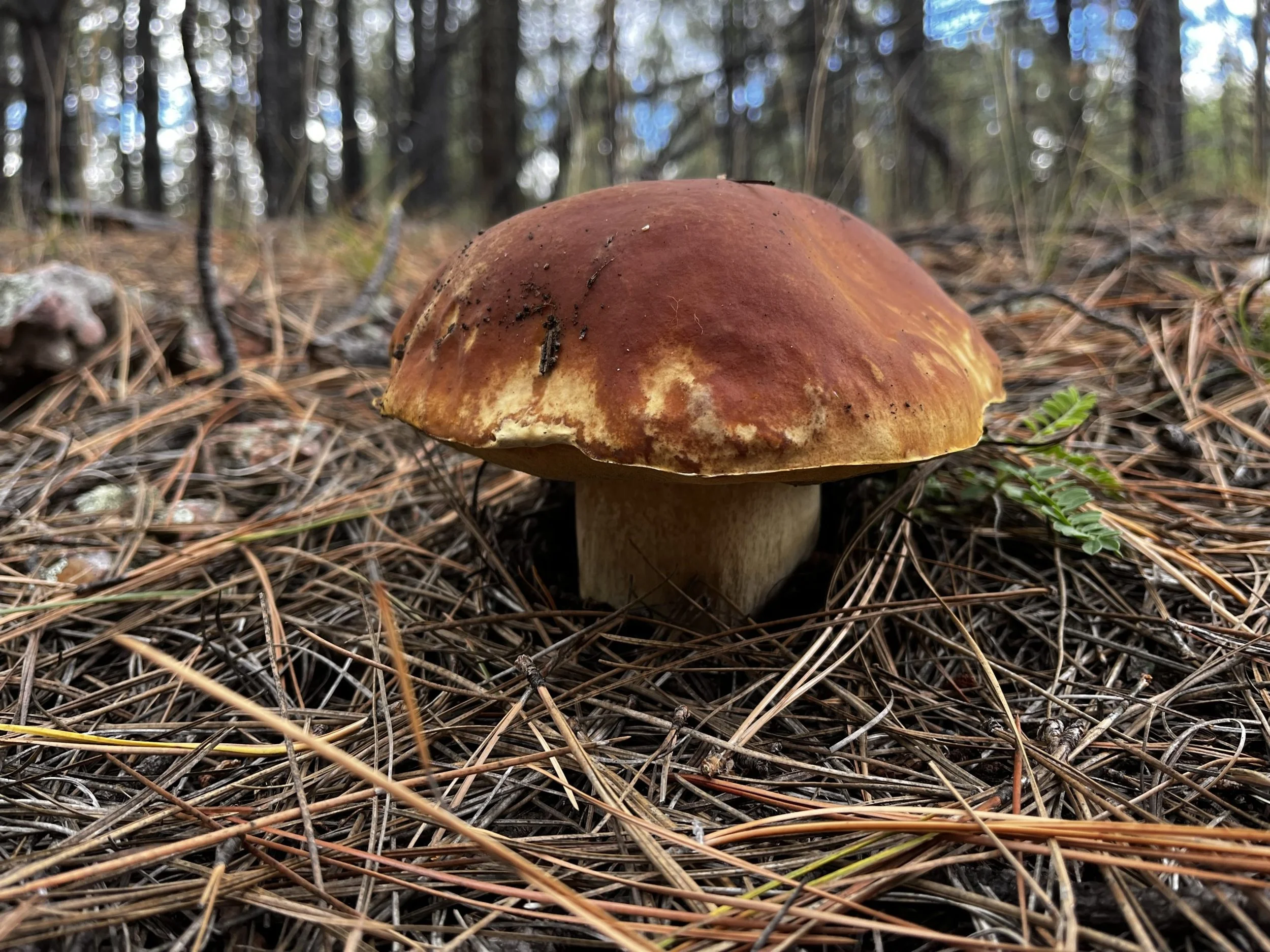
In Pine, we met all the hikers whose shoe prints I’d been following — Slocahontas, Thunderbird, Quadzilla, and Loose Tree.
Shower, bed, nice American breakfast (damn, I love those!), and the company of those guys at lunch — and we hit the trail again. Before leaving, a guy came over and asked if we were hiking the AZT.
“My colleague did it. Maybe I should too,” he pondered.
“You should,” says Slocahontas. “It’ll change your life.”
“It’ll definitely change your shoe size,” adds Loose Tree.
Couldn’t agree more. With both.
Things I learned along the trail.
I decided to add this bit at the end of my blog posts because I like learning about the places I walk through. I’m not local, so if you notice that I’ve misunderstood or missed something, please feel free to point it out in the comments.
1. Aspen trees are unique, because they reproduce underground and each tree is a shoot from the root system. One colony can take up tens of hectares. To protect young saplings from elk, deer and livestock, we saw fences along the trail.